Dragon Age III will be set in Thedas, the fantasy world in which the two previous games are set. The game will cover more geographic territory than its predecessors, with one map being described as four to five times the size of Ferelden, the setting of the first game in the series.[3]
The plot will involve a war between mages and templars, the foundations of which form the main plot of Dragon Age II.[3]
As in Dragon Age I and II, Dragon Age III is planned to showcase a new protagonist hero.[3]
Mortal Kombat, also known as Mortal Kombat (2011), is a 2Dfighting game with 3D graphics (2.5D) and the ninth installment in the Mortal Kombat series. It was developed by NetherRealm Studios (formerly known as Midway Games) and published exclusively under the Warner Bros. Interactive Entertainment label. The game was released for the PlayStation 3 and Xbox 360 systems on April 19, 2011 in North America, and on April 21 in Europe. Mortal Kombat was officially announced on June 10, 2010, accompanied with a debut trailer which showcases the new presentation and gameplay features. Although set directly after Mortal Kombat: Armageddon, the game focuses on the earliest period in the Mortal Kombat series (the trilogy Mortal Kombat, Mortal Kombat II, and Mortal Kombat 3). The storyline involves the thunder godRaiden attempting to change the present by contacting his former self.
Upon release, Mortal Kombat received positive reviews (achieving an aggregated score of 85 out of 100 at Metacritic). The game is currently banned in Australia due to "extreme violence". Mortal Kombat was officially announced on June 10, 2010, accompanied with a debut trailer which showcases the new presentation and gameplay features. Although set directly after Mortal Kombat: Armageddon, the game focuses on the earliest period in the Mortal Kombat series (the trilogy Mortal Kombat, Mortal Kombat II, and Mortal Kombat 3). The storyline involves the thunder godRaiden attempting to change the present by contacting his former self.
Upon release, Mortal Kombat received positive reviews (achieving an aggregated score of 85 out of 100 at Metacritic). The game is currently banned in Australia due to "extreme violence".
Gameplay
Mortal Kombat co-creator and creative director Ed Boon stated developers intended for Mortal Kombat to be accessible to the casual player[4] and more "engaging",[5] with experts on the fighting genre consulted[6] and new features were created to create a deeper fighting experience.[7]
Principal gameplay involves one-on-one fighting in a single 2D fighting plane, (at sixty frames per second)[8][9] although characters are rendered in three-dimension fashion,[10] the intent being to give depth and range to portrayals of various projectiles.[5]
Unlike previous Mortal Kombat games, four buttons on the game controller represent an attack and are linked to a corresponding limb. A "super meter" was also added which can be charged by various actions during battle such as performing a combo or getting hit by the opponent.[5] The super meter can be charged to three levels, with three special actions available. A single level can be used to deliver an enhanced version of one of the character's special attacks; two levels can be used to interrupt a combination attack, and the full three levels allow for the delivery of a special combination attack called an "X-ray move". During this attack, the camera provides an internal view of a defending character and shows bones and organs being broken or ruptured.[5][11] Extra features include the ability to play as multiple characters during the course of the story,[12] a Fatality training mode (allowing players to practice executing finishing moves),[13] the Challenge Tower, Tag team fighting and online mode.
The Challenge Tower mode is a single-player option Boon described as "similar to an arcade ladder". It includes 300 specific challenges of various difficulties providing currency rewards upon completion, with players having the option of using in-game currency to by-pass other difficult challenges.[5][13] Amongst the various challenges are "Test Your Might" (requires rapidly pressing buttons and specific timing to destroy blocks of varying difficulty), "Test Your Sight" (following an object hidden under a cup or skull and revealing the object after a shuffle), "Test Your Strike" (destroying a specific block in a stack) and "Test Your Luck" (battles with certain conditions, such as no jumping[13]) respectively. The four player tag-team feature is an original feature, allowing two players to play together.[14] Characters can suddenly appear on-screen and perform "assist attacks" or "special entry attacks" while the second character disappears.[5]
Developers stated that online gameplay for Mortal Kombat would be a main priority.[15] which GamePro editors called a "smart move",[16] The development team stated interest in capabilities to link the player's progression feed to their accounts held on social networking websites such as Facebook and Twitter, and recreate the feel of socializing with players in an arcade. The online mode includes a "King of the Hill" option, where up to eight players can act as spectators and play the winner of a fight. Spectators may also rate the fights and use the "forum" to determine how to perform various combos or moves observed during a fight.[5][12] A single-use online pass is also included with the game which is mandatory to access the online components. Online passes are also available from the PS Store and Xbox Live Marketplace.[17]
Characters
Boon stated in an interview with IGN that there was a focus on including characters from the first three games (Mortal Kombat, MKII, and MK3), claiming "If you have a favorite character from those games, you're probably going to see him or her in the game."[9] The game's roster offers twenty-seven characters (Baraka, Cyrax, Ermac, Jade, Jax, Johnny Cage, Kabal, Kano, Kitana, Kung Lao, Liu Kang, Mileena, Nightwolf, Noob Saibot, Quan Chi, Raiden, Reptile, Scorpion, Sektor, Shang Tsung, Sheeva, Sindel, Smoke, Sonya, Stryker, Sub-Zero and Cyber Sub-Zero - alternate character form) with the PlayStation 3 version featuring Kratos from the God of War series as a platform-exclusive character.
Game developers stated that the characters have been designed with the intent to make each character unique - each having their own individual stances, victory poses and Fatalities with no shared animations.[19] Lead designer John Edwards stated that characters are differentiated by features such as power and speed.[5] Producer Shaun Himmerick stated that the internal and external character design required "two months or ten weeks".[20] Boon stated that there is no exclusive character for the Xbox 360 version, claiming "Unfortunately, the circumstances didn't allow us to make a 360 exclusive."[21]
Shift 2: Unleashed (also known as Need for Speed: Shift 2 Unleashed) is a racingvideo game, the 17th title in the Need for Speedfranchise. It was developed by Slightly Mad Studios and published by Electronic Arts.[4][5]Shift 2: Unleashed was released worldwide during March and April 2011[2][3], although it has yet to be released in Japan. Shift 2: Unleashed is the direct sequel to the 2009 video game Need for Speed: Shift and expands on the gameplay and features introduced with the original.[4]Shift 2: Unleashed features over 145 cars from more than 37 manufacturers and over 36 different tracks, which players can compete in several types of races.[6][7] Players can also compete online.[8][9] The game also features three new main additions: an in-helmet camera, night-time racing and the Autolog feature introduced with Need for Speed: Hot Pursuit.[10]
Gameplay
Shift 2: Unleashed career mode is called "entertaining and interactive".[11]Shift 2 claims to redefine the racing simulator genre by delivering authentic and true-to-life dynamic crash physics, intricately detailed real-world cars, drivers and tracks.[12] During their careers, virtual racers partake in a variety of motorsports — like drifting, muscle car racing, retro car racing, Endurance races and circuit competition (i.e. FIA GT3 European Championship) — to hone their driving skills in hopes of becoming the FIA GT1 world champion.[11]
As well as an in-car camera view, Shift 2 includes a 'helmet-camera' in which the player's viewpoint is from their driver. The helmet cam moves with the head of the driver, being drawn from side to side as the car takes corners and jerking forward when the player crashes. As the car comes up to higher speeds, the edges of the screen will become blurred to simulate the tunnel-vision effect that drivers suffer when racing.[13]Shift 2's night racing also appears to be more advanced, with headlights dimming or turning off completely if damaged, further narrowing the player's view.[14]
The Autolog system is now 'Need for Speed DNA'. The system appears in Shift 2 in a more-or-less identical design to the original, but will include extra features that will not only provide track times for unique events, but also segregate data based on quick race tracks, race types and automotive disciplines. This essentially means that Autolog will be more than just a system that simply displays your friend’s times regardless of how, or when, they set them during their career.[13] Shift 2 features more than 140 licensed vehicles available for racing and tuning, a smaller number compared with racing sims such as Forza Motorsport 3 and Gran Turismo 5. However, executive producer Marcus Nilsson said the studio wanted to concentrate on having only the must-have speedsters.[15] Exclusively digitized for the game is the Pagani Huayra.[16] There are also 40 real-world locations including Bathurst, Spa-Francorchamps and Suzuka as well as fictional circuits like downtown London and Shanghai.[12]
Lead designer Andy Tutor confirmed that Shift 2 would not feature split-screen, saying, "There’s so much going on in the game, for example we’ve added if you’re drafting a guy now you’ll get all the little bits of crap from his car, all the gravel and rubber hit the car and they can hit your windscreen and things like that. It takes a lot of development time but it’s very authentic and that’s the experience we want. Unfortunately that means things like split-screen aren’t possible."[17]
Call of Duty: Modern Warfare 3 (abbreviated as Call of Duty: MW3) is a first-person shootervideo game, developed by Infinity Ward and Sledgehammer Games, with Raven Software having assisted in development.[6] It is the third installment in the Modern Warfare series, a direct sequel to 2009's Call of Duty: Modern Warfare 2, and the eighth Call of Duty installment.The game was released on November 8, 2011 in Europe and North America on Microsoft Windows, Xbox 360, PlayStation 3,[7] and Wii,[5] with a separate version for Nintendo DS developed by n-Space. In Australia, the Wii version will be released on November 23, 2011.[8] In Japan, Square Enix will handle this installment with a separate subtitled and dubbed version, as they did for Call of Duty: Black Ops. First, they will release a Japanese-subtitled version on November 17, 2011. Then, on December 22, 2011, they will release a Japanese-voice dubbed version. Within 24 hours of going on sale, the game sold 6.5 million copies in the US and UK alone and grossed $400 million, making it the biggest entertainment launch of all time.[9][10][11]
The player assumes the role of various characters during the single-player campaign, changing perspectives throughout the progression of the story. Unlike its predecessors, the campaign is spread over different days. Each mission features a series of objectives that are displayed on the heads up display, which marks the direction and distance towards and from such objectives. Damage to the player is shown by blood splatter shown on the screen. The player's health regenerates as time passes. Objectives vary in their requirements, ranging from having the player arrive at a particular checkpoint, to eliminating enemies in a specified location, to standing their ground against enemy squadrons, and planting explosive charges on an enemy installation. The player is also accompanied by fellow soldiers who cannot be issued orders.
Batman: Arkham City is a 2011 action-adventure video game developed by Rocksteady Studios. It is the sequel to the 2009 video game Batman: Arkham Asylum, based on the DC Comics superhero Batman. The game was released by Warner Bros. Interactive Entertainment for the PlayStation 3, Xbox 360 and Microsoft Windows. The game was officially announced during the 2009 Spike Video Game Awards and was released worldwide for consoles, beginning in North America on October 18, 2011, with the PC version scheduled for November. A Wii U version is set to release in 2012. Arkham City was scripted by veteran comic book author Paul Dini, who also scripted Arkham Asylum. It features a main plot and side-missions that develop their own sub-plots. The main storyline revolves around Batman's imprisonment in Arkham City, a sprawling new super-prison five times bigger than the original asylum and enclosing a wide variety of industrial districts, iconic locations and Gotham City landmarks. He must now stop mishaps occurring around this chaotic enclosure, mainly caused by his arch-nemesis the Joker. The game has received universal critical acclaim, making it one of the highest rated video games released in 2011.
Gameplay
Arkham City is an open world action video game that incorporates elements of stealth and predator tactics. All of the gadgets previously obtained in the first game are present at the start of Arkham City (with the exception of the Line Launcher and the Ultra Batclaw, which is replaced with the regular Batclaw and Sonic Batarangs). Most of them have improved or new capabilities; for example, the Cryptographic Sequencer can also track signals, the line launcher now can be deployed as a tightrope and has a feature that allows Batman to flip over and launch another zipline, switching directions. The remote control Batarang now has a built in brake and boost, and the grappling gun can now be used while gliding to boost Batman further up into the air. Four additional gadgets have been revealed: smoke pellets to confuse armed enemies when spotted by them, the Remote Electrical Charge which is a sniper-like taser gun used to power generators and shock enemies, ice grenades used to freeze enemies and make pathways through water, and a balled rope for tying up enemies. The game incorporates more puzzle elements; the use of Batman's "Detective Mode", which highlights elements such as enemy skeletons and clues on-screen, is used to perform forensic activities such as tracing the origin of a sniper round.
The player also has access to a criminal database that tracks several investigations across the city and the forensic puzzles much like the first game, as well as an extensive communications interception and tracing network.[9] However, Rocksteady's art director David Hego described the new detective mode as an "augmented reality mode", and game director Sefton Hill has also stated that although enemies and evidence can be seen more clearly, the navigational part is toned down as they found that some players completed Arkham Asylum using detective mode almost throughout the entire game.[10] Optional challenges from the Riddler to collect hidden trophies placed around the city are also present, but require additional effort to locate, such as interrogation of men loyal to the Riddler, and the use of nearly all of Batman's gadgets to disable "traps" and barriers placed around them. After a certain number of trophies are found, Batman must go rescue a hostage that the Riddler has captured, which requires him to disable death traps set by the Riddler.[9][11]
The player controls Batman, making their way around Arkham City to complete mission objectives. In addition to the primary mission, the game introduces secondary missions featuring a number of key characters and their stories. The player can opt to move silently, avoiding inmates and other enemies using a combination of gadgets to sneak up on enemies to incapacitate them. Batman's gliding ability has also been upgraded, allowing players to dive downward and pull themselves back up, making it much faster to move through the air.
At other times, the player may be forced to fight inmates using an improved version of the Freeflow combat system from Arkham Asylum, allowing for multiple simultaneous counters, the ability to counter thrown objects, jump attacks, powerful multi-strike beat-downs, upgraded Batarang and Batclaw attacks, and the ability to use gadgets such as the Explosive Gel and line launcher in Freeflow. Movement about the city is made difficult due to the formation of gangs and territory between rival villains, such as Two-Face, The Penguin, and the Joker, that causes in-fighting that Batman may avoid.[9] Catwoman is also a playable character with her own heist-focused storyline at specific points in the game. Her combat is more acrobatics-oriented and features her claws, whip, and bolas.[12] She has her own version of Detective Mode called "Thief Vision" to locate items for stealing. Dax Ginn recently revealed at Gamescom that the game has about 40 hours of gameplay with the main campaign lasting 25 hours and 15 hours for the side missions.[13][14] The game also contains 436 Riddler challenges, which make up one of the multiple side missions that players can embark on at any given point in the game.[15] Rather than rely on maps, the player can mark riddler puzzles as they are found, if the player does not have the necessary equipment to complete them. A portion of the puzzles are also specific to Catwoman, and can only be completed by her.
The Xbox 360 and PlayStation 3 versions of Arkham City include a stereoscopic 3D mode for 3D HDTVs and for 2D HDTVs via Inficolor 3D glasses. It uses TriOviz for Games Technology, which is integrated with Unreal Engine 3. All Arkham City gameplay and cinematics have S3D support.[16]
God of War III features gameplay similar to previous installments. The player controls the character, Kratos, in a combination of first-person/third-person combat (including quick-time), platforming and puzzle game elements. Kratos' main weapons are the Blades of Exile (initially the Blades of Athena), with other new weapons, including the Claws of Hades, the Nemean Cestus and the Nemesis Whip. The Nemean Cestus (a pair of fist gauntlets), and the Nemesis Whip are crucial to the game, as they are required to advance through certain stages of the game.
Unlike the previous games in the series, the primary weapons also dictate the use of magic, with each weapon having an individual magic ability: Divine Reckoning (Blades of Athena), Army of Sparta (Blades of Exile), Soul Summon (Claws of Hades), Nemean Roar (Nemean Cestus) and Nemesis Rage (Nemesis Whip). The power of each magic ability increases via upgrading the weapon to which each is linked (excluding the temporary Divine Reckoning). Kratos also has an array of secondary weapons referred to as Items that have limited usage before needing recharging (which occurs automatically), being the Bow of Apollo, the Head of Helios and Boots of Hermes. All three are required to advance through certain stages of the game.
The relics (Poseidon's Trident, the Golden Fleece and Icarus Wings) that were acquired in previous games are automatically retained. The Blade of Olympus is also retained, but is no longer a primary weapon, being now utilized in conjunction with the special magic feature, The Rage of Sparta. The Rage of Sparta is the equivalent to the Rage of the Gods and Rage of the Titans from God of War and God of War II, respectively, and provides temporary invulnerability and increased attack damage. The Blade of Olympus is also used in several cut scenes to provide the finishing move on several foes and is used as the magic ability for the Blades of Athena.
Kratos also acquires another "passive" item similar to Poseidon's Trident: Hades' Soul, which allows Kratos to swim in the River Styx without being attacked by lost souls. Health and Magic upgrades—Gorgon Eyes and Phoenix Feathers respectively—reappear, although in this instance, only three (as opposed to the original six) items need to be found for an upgrade. Minotaur Horns have also been added as a possible find and upgrade the charge for Items. All three upgrades are found in a style of chest that differs from normal Health and magic-giving chests, unlike the previous games.
Almost all upgraded weapons and magic acquired in previous games are gone at the beginning of gameplay, with Kratos only retaining the fully upgraded Blades of Athena, the Golden Fleece, Icarus Wings, and the Blade of Olympus. The Blades of Athena and Blade of Olympus are lost after the first main battle. The Blades of Athena, however, are replaced by the Blades of Exile and the Blade of Olympus is eventually recovered. Many of the familiar combination attacks reappear, with the new additions including the combat grapple: a ranged "grab" maneuver that, depending on the weapon, can either pull Kratos towards foes or forces them away (necessary at certain points in the game, with Kratos effectively "riding" harpies across chasms), and a simple grab with bare hands that allows Kratos to use lesser foes as a battering ram. Kratos can also rapidly switch between weapons (eventually, all four primary weapons) in battle and continue the same attack combination.
Other changes include an increase in the number of enemies onscreen, increasing from 15 to a maximum of 50.[5] During several major battles, the camera also pans out away from the fight sequence, although the player can still control Kratos while the camera is panning to add a new level of gameplay.[6] Game director Stig Asmussen claimed that the hardware capabilities of the PlayStation 3 allow more flexibility in creating the characters of God of War III and allow for further interaction with the environment. Christer Ericson of SCE Santa Monica Studio announced on his Twitter page that God of War III has seamless loading (no Loading screens and No HDD installation requirement).[7] The sex mini-game included in previous installments returns (an encounter with goddess Aphrodite while her two servants watch), although, on this occasion, it links into the story. Other extra features includes the addition of 10 "godly possessions", which are often hidden near foes and provide additional abiliities during bonus play. The game also features 36 Trophies, which are awarded for Kratos' achievements (e.g. "Releasing the Floodgates" for killing Poseidon). Upon obtaining the platinum trophy, players are linked to the website, spartansstandtall.com. On May 4, 2010, it was revealed that the site was a teaser and the official site for the second PSP title in the franchise, God of War: Ghost of Sparta.
As with previous game installments, a challenge mode is included (seven trials called the "Challenge of Olympus"). A bonus challenge mode was included in both the Ultimate and Ultimate Trilogy Editions of the game called the "Challenge of Exile", with an extra seven challenges (now available on the PlayStation Store). A new mode called the "Combat Arena"[8] is also included in all versions, with the player able to create their own battles and set the level of difficulty. Stig Asmussen stated more challenges may be added as downloadable content to maintain the series.[1]
Naruto Shippuden: Ultimate Ninja Storm 2, known in Japan as Naruto Shippuden: Narutimate Storm 2(NARUTO-ナルト- 疾風伝ナルティメットストーム2?) is the sequel to Naruto: Ultimate Ninja Storm developed by CyberConnect2 and published by Namco Bandai Games. It was released during 2010 on the PlayStation 3 and Xbox 360 on October 15 in Europe, October 19 in North America and October 21 in Japan.
Gameplay
The gameplay retains many of the elements from the first game and has 23 fighting stages. It has 9 chapters including the prologue and extra chapter. Each character can also gain new combos and jutsu by activating the Awakening Mode. As the story progresses, players will unlock new Jutsu and Ultimate Jutsu for certain characters. Jutsu clashes, however, have been removed.
Support characters return with 2 new features. The first feature is Support Types. These types are Defense, Attack, and Balanced. Each of these can be unlocked for each support character and will decide the actions of the support character during Support Drive level 1. The 2nd new feature is the Support Drive. Support Drive has 2 levels. Level 1 is activated once the players support characters are summoned enough times. When Support Drive level 1 is activated, the players support characters will summon themselves automatically depending on their support type depending on what actions the player is executing. When a support character automatically summons itself, it will not reset the support character charge gauge, and can even summon when the gauge is not full. A support character cannot be manually summoned by the player if it has already automatically summoned itself. If a support character is set to Defense, it will automatically summon itself when the player is charging chakra, block the opponent from dashing into the player. When a support character is set to Attack, it will help the player attack the opponent through combos, and knock the opponent back when a combo sends them flying. When a support character is set to Balanced, they will throw projectiles along side the player when the player uses chakra projectiles and block incoming Ultimate Jutsus, at the expense of losing that support for a while. When Support Drive level 2 is activated, for a limited amount of time the player will be capable of releasing a Team Ultimate Jutsu. A Team Ultimate Jutsu is activated by hitting the chakra button 3 times and then the attack button. A Team Ultimate Jutsu drains an enormous amount of the players chakra, and does massive damage if it makes contact with an unguarded opponent.
The game does not have free roaming in the same sense as the original, instead it is replaced by more traditional JRPG screens and movement. In addition to the Leaf Village, players are able to travel outside the village, ranging from forests to deserts, and also the Hidden Sand Village. Boss battles have returned, with quick-time events and cutscenes.
Players can access multiple online features; quick matches have opponents chosen at random, ranked matchees with leader boards, match customization, as well as the availability to host matches.
Ultimate Ninja Storm 2 features 44 characters from the Shippuden series including Sage Mode Naruto and the exclusive Taka Sasuke[4] as well as Tekken 6's Lars Alexandersson. Lars appears in his costume from Tekken 6 designed by Naruto creator Masashi Kishimoto.[5]
Grand Theft Auto V is an upcoming open worldaction-adventurevideo game published by Rockstar Games and developed by Rockstar North. The game will be the first major title in the Grand Theft Auto series since Grand Theft Auto IV (2008), which started the fourth "era" in the series.[a] The game is to be set in fictional Los Santos in the state of San Andreas and its surrounding areas, based on modern-day Los Angeles and Southern California.[2] A rendition of Los Santos was previously featured as one of three cities in 2004's Grand Theft Auto: San Andreas, from the series' third era. The debut trailer for Grand Theft Auto V was unveiled on 2 November 2011.[3]
In September 2009 during an earnings call, Take-Two Interactive CEO Strauss Zelnick answered a listener's question about the next Grand Theft Auto. He replied, "We're not going to announce it, we're not going to announce when we are going to announce it, and we are not going to announce a strategy about announcing it or about when we are going to announce it either, or about the announcement strategy surrounding the announcement of the strategy."[4]
In a November 2009 interview with The Times, Grand Theft Auto producer Dan Houser discussed his work, including the future of the series. Confirming for the first time that the team has started thinking about Grand Theft Auto V, the piece stated that Houser planned to co-write a script that reached about one thousand pages in length. In the same interview, Houser explained the company's basic workflow of creating new games in the series, which involves coming up with the city first, and then the lead character later.[1][5][6]
In July 2010, Rockstar North posted seven job ads related to a new title. The firm looked to fill positions including Environment Artists, Physics Programmers and Character Animators. The job ad for the latter asking for those with "professional experience developing a third person action game". It was unknown if Rockstar was hiring for GTA V, or the firm was bulking up its Agent team.[7]
In December 2010, Take-Two chairman Strauss Zelnick said that the company "won't annualise" its biggest franchises like Grand Theft Auto and Red Dead Redemption. He told Reuters that doing so would threaten their quality and risk burning out consumers.[8]
In February and March 2011, there were several possible minor leaks of supposed GTA production, including domain name registrations,[9] and casting calls featuring previous GTA characters.[10] The first signs of the game went online in February 2011, via an actor's CV,[11] which was followed by the discovery of Rockstar-registered GTA style URLs.[12] In March a number of casting calls for voice acting in a project codenamed Rush were leaked onto the internet. Considering one role included James Pedeaston, a radio personality in Grand Theft Auto: San Andreas, the project was presumed to concern Rockstar.[13][14][15]
In June 2011, sources allegedly close to the developer said the title is "well under way", with final touches like mini-games already being applied, and a 2012 release "pretty likely". "It's the big one," they also said of the game, noting that GTA V's scale is vast.[16]
In a July 2011 interview with PSM3, Team Bondi co-founder Brendan McNamara was asked if Rockstar (who published Bondi's 2011 L.A. Noire) was considering the proprietary MotionScan face-scanning technology for the next GTA game. McNamara replied, "Yeah, I think they're looking at it for every game. As much as L.A. Noire is a huge game, Grand Theft Auto is incredibly huge, so you've got all the problems of how big the cast would be and how many lines would you have to record and all that kind of stuff. Obviously we'd like them to, and they're more than welcome to use MotionScan, but if they decide it's not right for that and want to use it for another game, then that's fine too."[17]
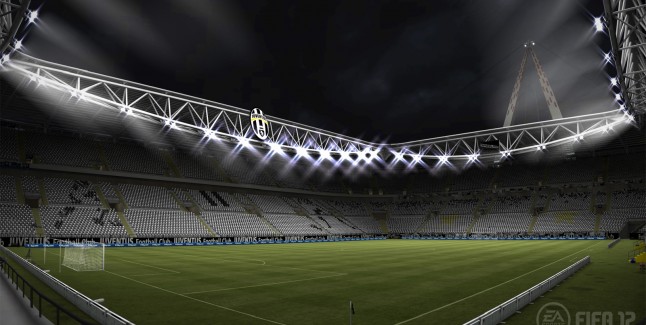
FIFA 12 (titled FIFA Soccer 12 in North America) is the nineteenth game in Electronic Arts' FIFA series of association football video games. It was developed by EA Canada, and published by Electronic Arts worldwide under the EA Sports label. David Rutter, the line producer for FIFA 12, promised "a revolutionary year for FIFA ... especially in the gameplay department."[6]
An "Ultimate Edition" of the game will be available through Game and Gamestation stores. It includes four monthly Ultimate Team gold packs, with each pack containing 12 items including players, contracts, stadiums, managers, staff, fitness, healing, footballs, kits and badges. Each pack contains one rare item, such as enhanced player attributes, longer contracts and the most coveted players.[7] On 22 June 2011, EA Sports announced that the Microsoft Windows version of FIFA 12 will have the same engine, features, and competitions as the PlayStation 3 and Xbox 360 versions.[3]
Along with several other new EA Sports titles, FIFA 12 was available three days early to purchasers of the EA Sports Season Ticket.[8]
The release date of the FIFA 12 demo was announced at the Gamescom event in Germany on 16 August; the demo was available from Xbox Live Marketplace and EA's Origin Store[9] for Microsoft Windows on 13 September 2011,[10] though the Playstation 3 demo was not available in Europe until the following day.[11]
Gameplay
Three major gameplay changes have been implemented in FIFA 12; these are the Impact Engine, Tactical Defending, and Precision Dribbling.[1]
In development for several years,[1] the Impact Engine improves collision variety, accuracy, and momentum preservation.[14] A new advanced procedural animation system is used along with collision physics to produce different results depending on the players and physical forces involved.[15] This affects all players, so even those off the ball may have collisions.[15] The Impact Engine has been cited as a game changer, making FIFA 12 less structured and synthetic than its predecessors,[15] and has been described by producer David Rutter as the biggest technological change to the series since the transition to the current generation of consoles.[1] The Impact Engine also directly affects injuries sustained by players during a match.[15]
The new Tactical Defending system aims to change the approach to defending by placing equal importance on positioning, intercepting passes and tackling. When defending there will be more of an emphasis on slowing attackers down and containing them, and pressuring them into making mistakes.[15] This is intended to be a more manual form of defending, requiring greater timing and precision[16] when compared to the defensive "press" system used in previous FIFA games.[17] The old system, now dubbed "legacy defending", where a button press causes an AI player to hone in on the player in possession of the ball, can still be used offline,[18] and in online friendlies and custom unranked matches.[19]
The Precision Dribbling feature allows players to dribble whilst shielding, meaning you can still move around the pitch whilst holding players off, rather than being rooted to the spot.[20] Close control has been added below jogging as a way of allowing players to take smaller, more frequent touches, keeping the ball closer and keeping tighter control.[20] Players will now be much more aware of their surroundings. As an example, players in possession near the touchline will understand their position, and keep tighter control of the ball to stop it running out of play.[20]
An improved artificial intelligence system named Pro Player Intelligence aims to make AI-controlled players react to the skills and capabilities of other players with appropriate actions. For example, a winger will be more likely to cross the ball into the box when he has a waiting team-mate with aerial ability, whereas he might look for support and play the ball along the ground if that team-mate is less of an aerial threat.[21] Players will also make better use of their own strengths, so for example a creative player might look for less obvious opportunities such as playing long accurate passes, where another player in his situation would be more likely to play it safe with a short pass.[22]
Match presentation has also been overhauled with a new default camera angle and improvements to the broadcast-style match build-up.[22] Some in-game cutscenes have been removed, such as those before throw-ins and corner kicks. Instead, a player will simply run to perform the task in question with no interruption.[17]